Plateau · Mile End
Windows and balcony doors in the Plateau and Mile End
In the Plateau, the borough's rules and plain good sense point the same way. Repairing an original window generally needs no permit; replacing it does, and the new window has to share the original's characteristics. So a stiff guillotine sash, a worn crank or a fogged thermos (the sealed glass unit in the frame) is usually worth fixing before anything is replaced. We're a free referral service: we connect you with an independent local glass professional who can tell you which fix your window needs and whether the borough needs to hear about it.
At a glance
- Housing
- Plexes and flats built up between the late 1800s and the 1930s
- Repairs
- Generally no permit, outside heritage protections
- Replacement
- Permit required; same characteristics as the original
- Common jobs
- Guillotine sashes, balcony doors, thermos swaps
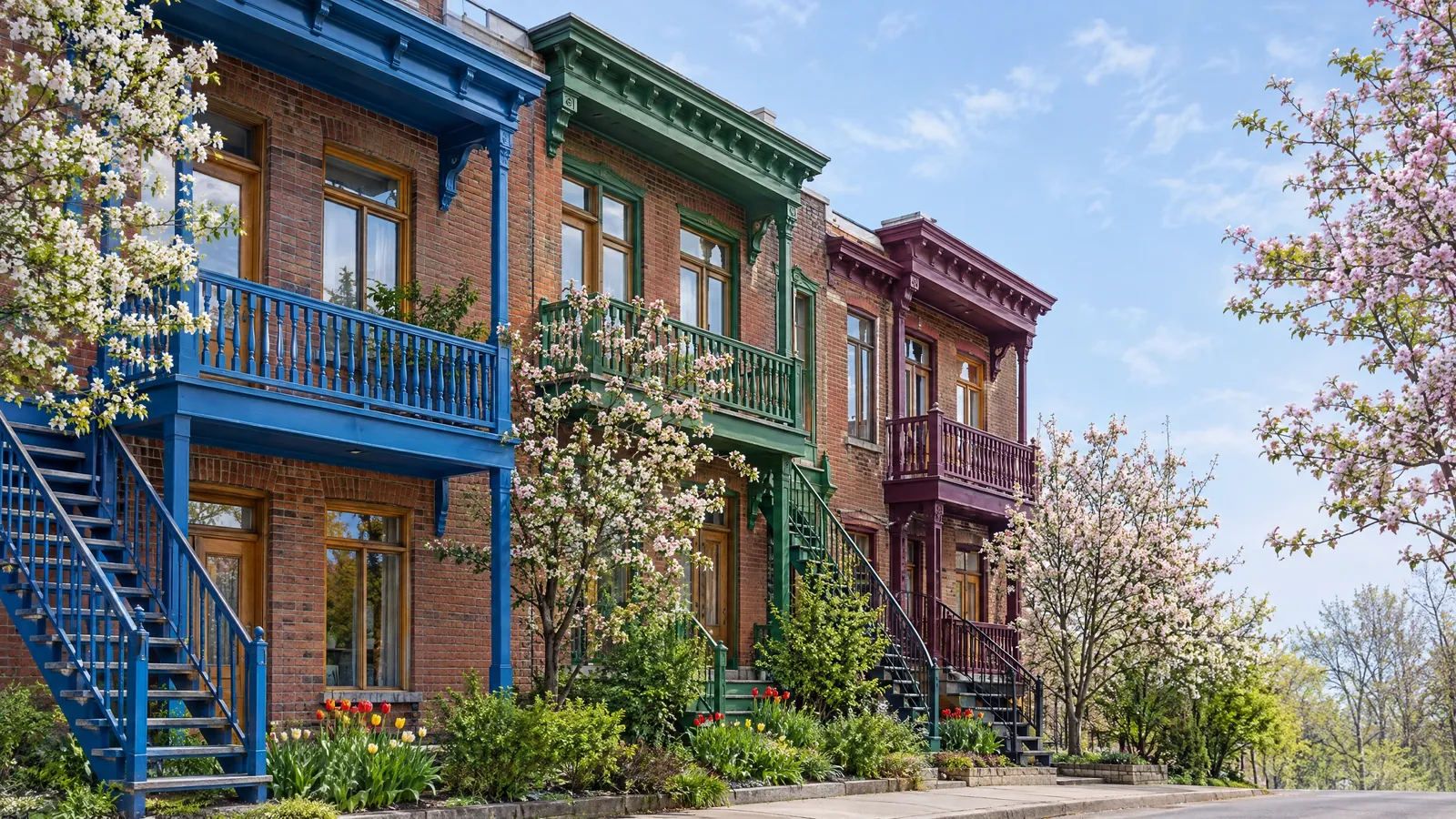
Plexes built between the annexations and the Depression
The Plateau filled in as the villages around it joined Montreal: Saint-Jean-Baptiste in 1886, Coteau-Saint-Louis in 1893, DeLorimier in 1909 and Saint-Louis-du-Mile-End in 1910. Mile End went from a village of a few thousand people to tens of thousands in about twenty years, and the Depression of the 1930s slowed building afterwards.
What remains is a dense stock of plexes from one long building boom, many with outside stairs and upper-floor balcony doors. That is the housing the borough's window rules are written for.
Repairing original windows: no permit in most cases
The borough's page on door and window work is clear on this point: repairing original windows or doors does not require a permit, except for buildings with heritage protection, described below (Plateau rules). That covers the ordinary work that keeps an old window going: freeing a painted-shut guillotine sash, a new cord, crank or latch, a reglazed pane, fresh weatherstripping.
Whether swapping a fogged thermos inside an original frame counts as a repair isn't spelled out, so ask the borough rather than assume. The borough has also reported easing some heritage requirements recently, so read the current version of its page before you plan. For the mechanical side, see crank, latch and hinge repair.
Replacing: the same characteristics as the original
Replacing a window or door, even with one of the same size, requires a permit, and the new one must have the same characteristics as the original components. Before choosing a model, the pro will want to record what's there now: how each window opens, how the glass is divided, the proportions and the material. The borough asks for a match rather than naming materials, so a switch from wood to something else is a question for the counter, product sheet in hand.
Street-facing work also carries an extra permit fee: the Plateau adds a surcharge for work on the parts of a building visible from a public road. Our borough permit guide explains the rest of the file.
The Mont-Royal heritage site and protected buildings
The repair exemption stops where heritage protection starts. Classified heritage buildings, buildings the borough identifies as significant architectural witnesses (témoins architecturaux significatifs), buildings inside the declared Mont-Royal heritage site and buildings in a protection area need a permit even for repairs. In a declared heritage site, Quebec also requires authorization to repair a building or change its appearance (Québec.ca). If your building sits near the mountain or has a known history, check its status before any work, repairs included.
Balcony doors, outside stairs and the shopping streets
Most jobs in the borough follow a few familiar patterns:
- Plex balcony doors: an upper-floor door that sticks, leaks air or has a cracked pane. Glass and hardware can usually be replaced in the existing door; a new door needs the permit and has to match.
- Foggy thermos: a new sealed unit in the existing frame keeps the original window, which is often what the rules favour anyway.
- Storefront glass: Mount Royal Avenue, the Plateau's principal street, and Saint-Laurent Boulevard are commercial arteries, and broken display glass on them goes to commercial glass pros.
Carrying a door or a large pane up an exterior staircase takes planning, so mention the floor and the stairs when you send photos.
Plateau and Mile End questions
Do I need a permit to repair my windows in the Plateau?
Generally not. The borough says repairing original windows and doors needs no permit, unless the building is classified, identified as a significant architectural witness, inside the Mont-Royal heritage site or in a protection area. A new cord, a crank, weatherstripping or a reglazed pane are typical repairs. If your building might have heritage status, check with the borough before work starts.
Can I switch from wood, or from hung windows, to something else in the Plateau?
The borough answers with a rule rather than a list: a replacement must have the same characteristics as the original components. A different material or opening type changes those characteristics, so it goes to the permit counter for a decision, with the product sheet and photos of the existing windows. If the real problem is a sash that's hard to open, a repair may solve it. Our permit guide explains the file.
Does a new thermos in an original window need a Plateau permit?
Ask the borough. Repairs to original windows generally need no permit and replacements do, but swapping only the thermos inside an existing frame isn't named either way on the borough's page. Describe the job exactly when you call: same frame, same sash, new sealed unit. Keeping the window this way also keeps its original characteristics, which is what the rules protect.
Why does a street-facing window cost more to permit in the Plateau?
Because the borough adds a surcharge to the permit fee for work on the parts of a building that can be seen from a public road. Front façades are the usual case; a window on the lane may not be. The current fees are on the borough's window permit page.
Do you find pros in Mile End?
Yes. Mile End is part of the Plateau borough, so the same permit rules apply, and we connect you with independent local glass pros who take jobs there, from balcony doors to broken shop windows. Send a photo of the façade and the window, note the floor, and we'll pass it on. Next door, Rosemont–La Petite-Patrie has rules of its own.